Last Sunday we had brunch at Harvest at Greenwood Lake and now I have to take back what I said about the food in the country being not as good as food in the city. Harvest has been open for a while but we only recently learned that the owner and chef Frank Constantino is an award winning chef from NYC and is featuring local, sustainable organic products. Clearly, once we learned that we had to try it.
Sunday, July 27, 2008
Harvest Time in Greenwood Lake New York
Friday, July 25, 2008
Eliminate High Fructose Corn Syrup from your Diet in 11 Easy Steps
Earlier this week, NY Times blogger Tara Parker-Pope posted "Does Fructose Make you Fat?" which highlights the results of a small study conducted by the University of Texas Southwestern Medical Center in Dallas. While the study is small it adds to the growing body of evidence that corn syrup is at least in part to blame for rising obesity rates in the United States. If you check it out be sure to read the comments too as many contributors site additional studies with even more compelling results.
We stopped buying products with trans fats or partially hydrogenated anything over a year ago. Then earlier this year we eliminated artificial sweeteners from our diet (with the exclusion of Splenda in my coffee - I've tried but I'm just not there yet). Most recently we have eliminated all products which include corn syrup. The latter was by far the most difficult. Not because the foods which contain it are so great, but because it is in absolutely everything. For weeks I spent countless hours with a three year old running rampant in the aisles, as I checked the labels of the products we regularly used and looked for suitable replacements. Of course the easiest thing to do is take Michael Pollan's advice and "Eat Real Food". However, with a three year old boy and a husband brought up on a mid-western diet, this is easier said than done. Here is a list of the things we've cut out and what we've found to replace them. Hope they help.
1. Soda, Energy Drinks, Electrolyte Drinks and Juice Drinks (including most flavors of Snapple, Capri Sun and Sunny D)
Replacement: Add fresh squeezed or organic juice to seltzer. The Freen loves this and thinks he is actually drinking soda.
2. American made Candy and Chocolate (sadly this includes M&M's)
Replacement: Yummy Earth Organic Candy and most organic chocolates which are becoming more readily available - Newman's Own line is great especially the chocolate mint cups although the caramel products have "organic corn syrup solids" which I have to think are just as bad. Most Nestle Toll House Chocolate Morsels are made with sugar.
3. Store Bought and Store Made Bread and Baked Goods (While high fructose corn syrup is actually the third ingredient on Wonder Bread almost all other grocery store bought white and whole grain breads and buns have it somewhere in the ingredients list.)
Replacement: Artisan, organic or home baked breads and baked goods. The A&P and Food Emporium carry the Ace Bakery Brand which does not contain corn syrup and offer several organic choices. You will pay a premium for it, but it is worth it. It goes bad more quickly so it is often on sale so I buy it up then and freeze it. If you're up for baking both Arrow Head Mills and Dr. Oetker have great organic mixes and base ingredients.
4.Fruit Roll Ups and Fruit Snacks (aka solidified fruit flavored corn syrup)
Replacement: Well start with real fruit. However my son has recently started asking for a fruit-roll up in his lunch because other kids have them. For those of you facing similar demands you can make fruit roll-ups at home or try FruitaBu Organic Smooshed Fruit Twirls.
5. Frozen pancakes and bagels (We had switched to Eggo minis because they didn't have partially hydrogenated oils but then once we eliminated corn syrup they were out too.)
Replacement: Use the Joy of Cooking pancake or griddle cake recipe to make mini pancakes, let them cool in the fridge, freeze them, and microwave as per store bought instructions. You can even substitute organic ingredients.
6. Cereal (Even Rice Krispies, Special K and most natural cereal bars)
Replacement: Honey Nut Cheerios are made with real sugar, Annies Bunnies and Kashi are all safe bets. The number of choices is definitely growing.
7. Yogurt and Gogurt and many of the kid branded yogurts are the worst offenders.
Replacement: You can make your own here too but I've yet to buy a yogurt maker despite the fact that it would pay for itself with all the money I spend on the stuff. So for the less ambitious there are great alternatives including Stonyfield Yogurt which uses naturally milled sugars and there are several brands of plain yogurt which can be mixed with honey and fresh fruit. The Freen and I shared a fat free Fage greek yogurt mixed with organic blueberry honey this morning. If you are looking for single serving kids lunch portion to compete with the Dora and Diego branded varieties Dannon has released an All Natural line.
8. Aunt Jemima and other non-natural Maple syrup (aka maple flavored corn syrup)
Replacement: 100% Vermont Maple Syrup. The Freen didn't like it at first (how sad is that) so I actually mixed real the fake stuff with the real for a while to get him used to the taste of real maple syrup.
9. Heinz Ketchup and other store bought brands including Hunts.
Replacement: Heinz has an organic version although the Annie's Naturals and Muir Glen are both less watery. (also note when travelling overseas regular Heinz is made with sugar)
10. Hershey's Chocolate syrup and Swiss Miss Hot Cocoa Mix
Replacement: We buy pre-made organic soy chocolate milk, like Zen Soy which I mix with regular organic milk. If you prefer not to use Soy milk there is AH!Laska Organic Chocolate Syrup and Santa Cruz also makes one. For cocoa we use Ghiradelli cocoa powder.
11. Ice Cream, ice cream bars, ice cream sandwiches and popsicles particularly anything with crunchies of chocolate pieces. We were big fans of Edys Slow Churned but it just isn't food so it had to go.
Replacement: Most store bought natural or vanilla bean ice cream is made with just cream, milk and sugar. We are lucky to have Bellvale Farms Creamery and Dairy nearby which makes the best all natural ice cream and provides spectacular views of Warwick Valley but for those who aren't as lucky Breyers Natural Vanilla with a few Ghiradelli 60% Cocoa Chocolate Chips or Santa Cruz Organic Chocolate Syrup does the trick. While making ice cream at home requires an ice cream maker, popsicles are very easy with organic fruit juices. For ice cream sandwiches we use Dr. Oetker's cookie mix and make organic chocolate chip ice cream sandwiches. Yum!
Thursday, July 24, 2008
Keep Manhattan, Just Give me That Countryside…At least For Now

When we moved to our country house in Greenwood Lake, NY, we did it to save money. We had been coming up here every weekend for over a year and we loved it. We had a wonderful but expensive full time nanny in the city and between the house and the apartment; we were starting to feel the pinch. On top of that rumblings about preschool were already going full force and I just couldn’t see competing for, let alone paying for the choices we had available to us on the Upper East Side.
Realize this was not your typical move to the suburbs. Greenwood Lake is not the suburbs. It is a good 50 miles away from New York City, on the west side of the Hudson and when you are here you feel like you’re in the country, because your are. It is in Orange County, NY known for good apple picking, West Point, Woodbury Commons Premium Outlets and that is about it. There is however a commuter bus that picks up at the bottom of our hill and a metro north train that picks up just over the mountain in Tuxedo. The one-way commute is on average 75 minutes although my husband has had a few days that he was commuting for longer than he was in the office.
So how did we end up here? One night two summers ago, when GWL was in full bloom, my husband and I sat on the deck and compared our expenses living in Manhattan to what our expenses would be if moved and it was clear that we could save almost half of what we were spending if we left the city. This was before my quest for sustainability began but looking back it was definitely the first step. We weighed the pros and cons and questioned the decision many times, but we knew then that it was a temporary move to test the waters and see if we could survive life outside of the city. Two months later we were packed, I passed my driver's test and The Freen was enrolled in daycare in New Jersey of all places.
Now it is almost two years later and we are faced with the decision of whether to stay in the country, move to the burbs or back to the city. Everyday since our move, I have had an internal and external debate about whether or not I want to raise my child outside of the city. Over the past two years we’ve looked at houses in Montclair, Glenwood, Ridgewood and Ringwood, NJ, New Rochelle, Pelham, Riverdale, White Plains, Brooklyn Heights, Park Slope, Williamsburg, Eastchester, Scarsdale, Cold Spring, Tarrytown, Nyack, Nanuet, Spring Valley, Sloatsburg, Tuxedo, Monroe and Warwick, NY. To say that we’ve grown tired of the search for the best place to live would be an understatement.
Having grown up in Manhattan, I struggle with feelings of guilt that I will be depriving my son of the benefits of city living only to indulge my own selfish desire for a real home with more bedrooms than the number of people that live in it. (I know... how totally unsustainable.) I worry that the country will be too mundane, too boring, too sheltered or more importantly that he will become a teenager with rat tails and tats begging me for a dirt bike. Despite my fears, this past weekend we went looking at houses in Warwick, NY for the fifth time this summer and found two houses that we love and we finally decided we would make an offer. So to just test my convictions….
On Monday – I picked up the Freen at school and had to walk quietly past a very large black bear that was pulling its dinner from the school’s dumpster
On Tuesday – The smell in the Freen’s room took a turn for the worse and we confirmed that there is indeed a rotting mouse in his wall. (Perfect timing since we have a potential buyer coming to see the house.)
On Wednesday – The smell was still there despite our best efforts to search and destroy. It doesn’t really matter because the people scheduled to see our house canceled anyway. Then we heard from the pre-school in Brooklyn that we applied to in March back when we thought we were moving to Brooklyn that The Freen was accepted for the September 2008 school year.
So now it’s Thursday and how do I feel? Do I still want to remain out here in the boonies? Yes. In the end, I love the city and I think raising your children in the city is one of the best things you can do for them. The pros outweigh the cons in just about every area except for two… money and time. In the city everything is so expensive that you have to work so hard just to get by that you don’t have time to just live. That said, as much as I love playing in the yard, going to the farm and hanging by the lake if money were no object, where would I live?…The city hands down…New York is where I'd rather stay.
For my own personal use I’ve compiled a pros and cons list about living in the country but I want to share it and invite you all to convince me that I have hay between my ears.
Pros to Living in the Country
Fresh air
More affordable (leads to a whole host of pros like you can travel more overseas, work less, spend more time with the freens)
Very easy to eat locally and support local farming
Good affordable child care and public schools
More space and own yard
You know your neighbors (could be a con for some)
Cons to Living in the Country
No Times Square (could be a pro for some)
The Commute
Lack of cultural diversity
Fewer good restaurants
Lack of privacy and anonymity
Have to drive everywhere (becomes particularly problematic in teenage years)
Bears
Friday, July 18, 2008
Judgment Day - California Poised to Trump NYC in Move to Become First State to Ban Trans Fats
California is poised to trump New York City’s progressive position as the first major metropolitan city to ban trans fats, by becoming the first state to enact a ban. Their state legislature passed a bill Monday to ban trans fats, which currently awaits Governor Schwarzenegger’s signature. While the SF Gate reported that the Governor has not taken a position, one hopes that in a state known for healthy living and as a politician who has been active in the efforts to curtail childhood obesity, that the Governor will pass this bill.
While I support personal responsibility and the need for better health education in our schools, in this case, where the health effects are clearly documented and other government bodies have done very little, I do believe that local governments must intervene.
On a visit to the FDA’s website (my favorite stomping ground), I found a document titled “ Questions and Answers about Trans Fat Nutrition Labeling”. While the document was long and did include a wealth of information regarding trans fats, this question and answer set struck me as interesting.
"Q: Should trans fat be eliminated from the diet?
A: No. According to experts, eliminating trans fat completely from the diet would require such extraordinary dietary changes (e.g., elimination of foods, such as dairy products and meats that contain trans fatty acids) that eliminating trans fat could cause an inadequate intake of some nutrients and create health risks. "
This is a particularly misleading response. What they should be saying is that while naturally occurring trans fats found in meat and dairy products have significant nutritional value which outweighs the negative effects of trans fats, American’s should eliminate the trans fats coming from processed food. In another document titled “Revealing Trans Fats” about the FDA’s move to enforce trans fat labeling I found the following table:
- 40% cakes, cookies, crackers, pies, bread, etc.
- 21% animal products
- 17% margarine
- 8% fried potatoes
- 5% potato chips, corn chips, popcorn
- 4% household shortening
- 3% salad dressing
- 1% breakfast cereal
- 1% candy
In case you're not great at math, this table tells us that 21% of trans fats come from animal products and 79% come from processed food. On top of this, it is widely known and accepted even by the FDA that trans fats raise LDL (bad) cholesterol, which accumulates on artery walls and that they lower HDL (good) chilesterol. So, if we know trans fats are bad for us and we know food can be made without trans fats, and there is little discernible difference as to how the food tastes, why then is the FDA unwilling to consider a ban that would significantly reduce Americans' exposure to bad fats? Let me pose this as a multiple choice question.
Is the reason the FDA is unwilling to consider a nationwide ban because they are looking out for the interests of:
A. FOOD manufacturers
B. DRUG manufacturers
C. ADMINISTRATION officials
D. All of the above
Here are a few hints....
- Unilever, the world's largest producer of margarine saw 22billion in annual sales for savory dressings and spreads in 2007.
- In 2005, Unilever spent the most money they’ve ever spent in lobby fees topping $1.1 million. Coincidentally, the same year the NY Times published this article titled “The Panic Du Jour: Trans Fats in Foods” and New York City began discussing the possible ban.
- Pfizer, the key patent holder on Lipitor, a cholesterol reducing statin saw sales of $12.7 billion in 2007.
- Hank McKinnell, Pfizer’s former CEO raised over $100,000 for President Bush's most recent campaign and Pfizer executives gave his campaign more than $110,000, and just for good measure the company gave the RNC more than $2.5 million in soft money between 2000 and 2003.
- The former commissioner of the FDA, Lester Crawford, plead guilty to breaching FDA conflict of interest rules twelve months after his resignation in 2005. As it turned out, he and his wife held shares in four companies that he was required to have sold, under FDA rules. These companies included the food companies Sysco and PepsiCo. In his time at the FDA, he was the chair of the FDA's Obesity Working Group and was working on reviewing calorie-content labeling for soft drinks. After Crawford's resignation he became Senior Counsel at the Washington D.C. lobbying firm Policy Directions Inc. In 2005, Policy Directions clients included Kraft Foods, the Pharmaceutical Research and Manufacturers of America, Nestle, Merck and the American Feed Industry Association.
Hasta la vista, baby.
-The Terminator Terminator 2: Judgment Day (1994)
A Tomato Grows Outside of Brooklyn
Thursday, July 17, 2008
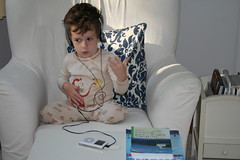
Freen rocks out to Band of Horses
Tuesday, July 15, 2008
To Vaccinate or Not to Vaccinate. Is that really the question?

When I had my son, it didn’t occur to me to look into the potential side effects of vaccines outside of how they might impact his sleeping and eating for the next three days. It was hard enough to just get him to the doctor, comfort him and reapply my make-up to hide the streaks my tears left before returning to work. At the time the vaccine autism debate was ongoing and highly debated online and overseas but it had not yet been embraced by the national media, nor did it have celebrity spokespeople.
Recently, a close friend asked me if I had my son vaccinated.To which I said of course. Then she told me about the fierce debate taking place online in community sites in Brooklyn and elsewhere. I started following the debates and ultimately started looking into the research myself. While I am by no means an autism expert or a Public Health scientist, I did get half way through my Masters at Columbia’s School of Public Health before life happened (read: I met my husband moved to San Francisco and started organizing conferences for healthcare executives instead of actually becoming one myself). That said, I can still get through a scientific paper and when I started looking into the autism and vaccine debate the basics I learned in those first couple years at Columbia came back very quickly.
At its core, the vaccine autism debate surrounds the use of thimerosal in vaccines. Thimerosal is an organo-mercury compound (approximately 49% mercury by weight) used to prevent bacterial infections in multi-dose injectable drugs. Despite a lack of conclusive evidence that it was harmful, thimerosal was removed from all pediatric vaccines in 2001 with the exception of the influenza vaccine.
After weeks of research, I’ve found nothing but correlational evidence and personal testimony that there is a link between autism and vaccines. If there is anything that my studies in epidemiology taught me, it is that correlation does not imply causation. So while there is certainly some evidence out there that suggests that the scientific community should explore ways to create safer and more effective vaccines for our children, there is nothing definitive that says that vaccines are dangerous.
What I do know without a doubt is that infectious diseases like the flu and measles kill children and fewer vaccinated children increases the number of disease related deaths. In the 2007-2008 flu season 83 children under the age of 18 died of the flu. In 2006-2007 68 died and in 2005-2006 35 died. The numbers of childhood flu related deaths are on the rise and this does not include the numbers that were hospitalized. During the 2007-2008 season of those dead 58 had not received flu shots and 25 had. As it happens the 2007-2008 vaccine batch was not a very good match for the flu, however if no one received the vaccine the numbers would be devastating.
What prevented a serious outbreak is something called herd immunity. What many parents engaged in this debate don’t seem to understand is that immunization is a public health necessity and without it we would all be dead. The theory of herd immunity is based on the fact that the more immune people there are in a community the harder it is for a disease to spread. The fact is that vaccines don’t work 100% of the time and that is ok. They only need to work on a certain percentage of the population to prevent the spread of disease. What is required to prevent the spread of disease is that the population reached the immunity threshold.
You see the spread of infectious disease is a numbers game…it starts with what is called the basic reproduction number which tells you how contagious a particular disease is. This is the number of people that will get the disease from one infected individual absent any intervention. For measles this number is between 12-18 and for the flu it is between 2-3, so the measles is almost six times as contagious as the flu. After the basic reproduction number, the other very important number is the number of people not immune to the given disease. Other factors must also be considered, however the biggest factor in determining the threat of a pandemic is the number of people not immune which is why it is an absolute imperative that when a vaccine exists for a deadly infectious disease as many people as possible be vaccinated.
According to the CDC in 2008 between January and April 64 people contracted measles, 14 of them babies too young to receive the vaccine. While measles remains rare in the U.S., 20 million people a year (311,000 children in 2005) contract measles worldwide, so if our herd immunity is weakened an epidemic is just a plane ride away. Yet the CDC reports that a quarter of children in the U.S. were not being vaccinated despite the fact that scientific evidence provides no support for the hypothesis that vaccines are linked to autism. In England where the debate is even more heated than here, there were 971 cases of measles in 2007, the largest number since records began in 1995.
When I began researching this topic, I approached it in much the same way as I did BPA and pharmaceuticals in the water. I was looking for a wrong and a right answer, someone to blame for misinformation and an alternative solution, but what I realized was that this is just not that simple. If BPA might be bad for you, use products without BPA. If tap water might contain harmful contaminants, filter it or use bottled water. If vaccines might cause autism, definitely still vaccinate because not getting vaccinated kills people. While researchers work to determine the safety and find safer alternatives, we as responsible parents must continue to vaccinate our children. The question is not whether we should vaccinate or not or whether vaccines are linked to autism. The question is why do we vaccinate our children and the answer is to prevent millions of deaths each year.
Questions We Should Be Asking
Do our friends, families and politicians understand the concept of herd immunity as it relates to vaccines?
Can pediatric vaccine schedules be revised to minimize potential risk?
Can pharmaceutical companies develop safer vaccine additives?
What do our pediatricians think regarding the safety of current vaccines and vaccine schedules?
Will our pediatricians minimize the number of vaccines our children receive at each visit?
Given the volatility of this debate, I probably don’t need to invite comments, but as I am always interested in what others know and are thinking about, I welcome you to share your thoughts.
Friday, July 4, 2008
Go Green and Bear It - Celebrate Your Independence from Mindless Consumer Spending
Sitting here feeling rather pale, cast in the gray hue of 4th of July cloud cover, I can’t seem to figure out what happened to the month of June. Looking back it was four weeks of scattered thunderstorms, dotted with a handful of birthday and father's day celebrations, capped off with 5 days in London where paying upwards of $50 each morning for breakfast, I found little comfort in the fact that England is also in the midst of a mortgage crisis and beginning to feel the pinch of inflation. While walking past Parliament, I noticed the war protesters, (who it seems have left their post only briefly since my last visit in 2002 to update their placards and perhaps take a quick shower) and I was quickly reminded that the UK has been at war as long as the US.
More broke and bloated than I had planned, I returned from London to headlines that the US stock market is "officially in bear territory". After months of endless stories on the tanking real estate market, rising foreclosures, sky rocketing gas prices and the appearance of words like staycation in the national lexicon, this came as no surprise.
However, for the environment there may be a silver lining. As a result of this "slow down" people are in fact consuming less, all the news media outlets reported Friday that this holiday weekend mass transit ridership is up, the number of cars on our highways are down and more people are in fact staycationing. While the price of gas is likely the culprit, I'd like to think that the green movement is helping people feel better about their choices. Since we began "going green" as a family our consumer discretionary spending or more appropriately put "mindless consumer spending" has dropped significantly regardless of the price of a barrel of gas. It is choosing to forgo the trip to the outlets during our staycation that really makes the difference to our budget.
I've recently found myself thinking quite a bit about the connections between the economy, the environment and consumer spending behavior and I am likely to write more on the topic, however since the clouds seem like they might let a little sunshine through, for now I’ll just share a short list of links which offer some great tips on how to go green and save and invite you to post your favorite tips for going green in a bear market.
Happy Independence from Mindless Consumer Spending Day (as decidedly un-American as it may be)!
Good Sites with Tips on Going Green and Saving Money
http://www.finishrich.com
http://davidbach.blogs.com/blog/
http://www.econsciousmarket.com/eco-times/go-green-slow-down-save-money/
http://www.wisebread.com/ten-more-ways-to-go-green-and-save-money
http://www.worldwatch.org/resources/go_green_save_green
http://www.bargainist.com/deals/2007/06/10-ways-to-go-green-and-save-money/
http://www.everythingfinanceblog.com/2008/01/save-energy-go-green-and-save-money-too.html
http://www.fool.com/personal-finance/general/2006/11/30/go-green-save-money.aspx
http://www.iht.com/articles/2007/08/22/opinion/edfriedman.php